
Black August & Educational Liberation.

Every August, we pause to honor the activists and liberation seekers who came before us, celebrating Black August and the revolutionary spirit that continues to guide our work. This remembrance runs deep in everything we do at Gather Forest School—our quest for an educational model that centers the liberation and dignity of the Black child is rooted in this same tradition of resistance and transformation.
In an age where we're all searching for educational models that truly work for children of every race, at Gather we know that this model looks different for Black American children.
Stats Are Clear: Our Babies Need Something Different

Y'all, the numbers are heartbreaking, but we need to face them together. Right now, Black children are being suspended at rates nearly 4 times higher than white children—13.7% compared to 3.4%. Nearly 40% of our babies are chronically absent from school, compared to 24% of white students. And when it comes to academic achievement, only 30% of Black students are meeting English standards while 61% of white students are.
Here's what really gets me: our children are attending schools that get $2,700 less per student in funding. They're more likely to have inexperienced teachers, and despite making up 16% of elementary students, Black children represent only 9% of those in gifted programs. Meanwhile, only 6% of teachers in our schools are Black, even though research shows our children score higher and are 32% more likely to attend college when they have Black teachers.
Alternative Schools: Great Results, But Who Can Access Them?
Now, here's where it gets interesting. When we look at Montessori schools, Black children make up only 6% of students, but the ones who do attend? They're achieving higher proficiency rates than their peers in traditional district schools. Studies show smaller achievement gaps between Black and white students in Montessori settings, with some research showing our children reaching the same levels as white children by the end of preschool.
But here's the thing—these schools on average cost between $18,000 -$30,000 a year. Most of them are in suburban areas that aren't always easily accessible. And when it comes to Waldorf schools? There's literally no comprehensive data on how many Black children even attend, and almost no research on how our children do in these spaces.

When We Center Blackness, Magic Happens
But here's where my heart gets full, family. When we look at schools and programs that center Black children's experiences and culture, the results are absolutely beautiful.
Let me share some numbers that will make you smile:
Chick Elementary School in Oakland implemented an African-centered curriculum and saw their 4th grade math proficiency jump to 48%—double the statewide rate for Black students. The Sanford B. Ladd School in Missouri went from being the 48th out of 48 performing schools to the top 10 after adopting African-centered approaches.
And our HBCUs? Chile, they're still showing us what's possible. HBCU graduates are 12 percentage points more likely to earn college degrees, and these institutions produce 25% of African Americans with STEM degrees while representing only 3% of all colleges. They're also producing 80% of Black judges and 50% of Black lawyers.
Students in Black-centered programs report 84% increased academic engagement. They develop stronger cultural identity, higher self-esteem, and that cultural pride becomes a shield against discrimination's harmful effects.
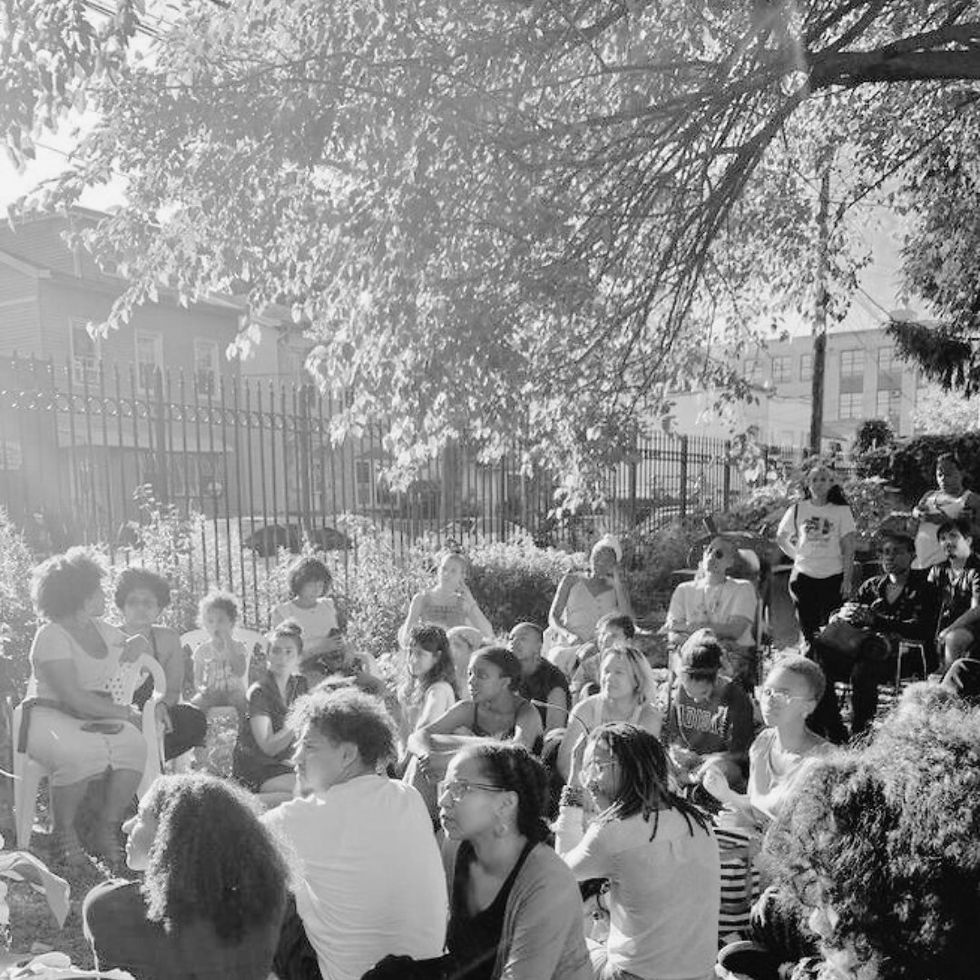
Black August: Our Blueprint for Liberation Education
This is why Black August matters so much to our work. Founded in 1979 by incarcerated activists at San Quentin, Black August emerged from a deep understanding that education is liberation. The movement's principles—"study, fast, train, fight"—remind us that learning is revolutionary work.
When we look at the school-to-prison pipeline—where Black students make up 39% of expulsions despite being only 15% of enrollment, where over 20% of Black students are handcuffed during police encounters compared to 9% of white students—Black August's analysis of systematic oppression gives us the framework we need to build something different.
Our Saturday Series: Liberation Through Joy
That said, this year, like every year, we are looking for ways to make these educational opportunities and moments available for as many children as possible. Because what we do know is that 120+ minutes per week in nature reduces risks for heart disease, mental health struggles, and even vision problems. So the moments in nature, with a communal connection, and Black-centered programming increase a child's happiness, ability to cooperate, their joy and their groundedness within themselves and others.
This year, we're starting our Saturday series with Black August.
We've celebrated through storytelling and art, and now we're combining them all into music and artistic expression.
We're going to tell our story of liberation through music, through musical notes, through poetry and movement. We're bringing our children together to celebrate being liberated and loved.

Because here's what we know: our children deserve educational experiences that see them, celebrate them, and prepare them not just for tests, but for life. They deserve to learn in spaces that affirm their brilliance, connect them to the earth, and help them understand their power to change the world.
Peace ✌🏾 y’all
ps. As always, every single dime that you spend for our events goes to materials for the event, and the rest towards scholarships and love offerings to those that are needing a boost. We never want money to be an issue to attending an event—so please, reach out if you'd like to come but cannot pay the fee.


I read the post about Black August and how education was used as a tool for freedom and self worth in hard times, and it really made me reflect on how learning connects to identity. In my own struggle with tough classes I once used high school level course help when simple lessons felt too heavy and I needed clear explanations to get through. That moment reminded me that patience and curiosity make learning stronger.